
정비와 청소 전 LOTO, 재가동까지 확인하는 법
수정일
설비를 정지해도 전원이 다시 공급되거나 잔류 압력이나 중력으로 설비가 움직일 수 있습니다. 다른 작업자가 정비 중인 사실을 모르고 재가동할 수도 있습니다. LOTO는 이러한 위험을 막기 위한 절차입니다. 이 절차에서는 에너지원을 차단하고 잠금장치와 표지를 설치해 작업이 끝날 때까지 차단 상태를 유지합니다.
국내 산업안전보건 기준도 정비, 청소, 수리처럼 기계가 갑자기 작동할 위험이 있는 작업에서 운전 정지, 전원 차단, 잠금장치나 표지판 설치를 요구합니다. 작업 시작부터 잠금 해제와 재가동까지 같은 절차에 따라 관리해야 합니다.
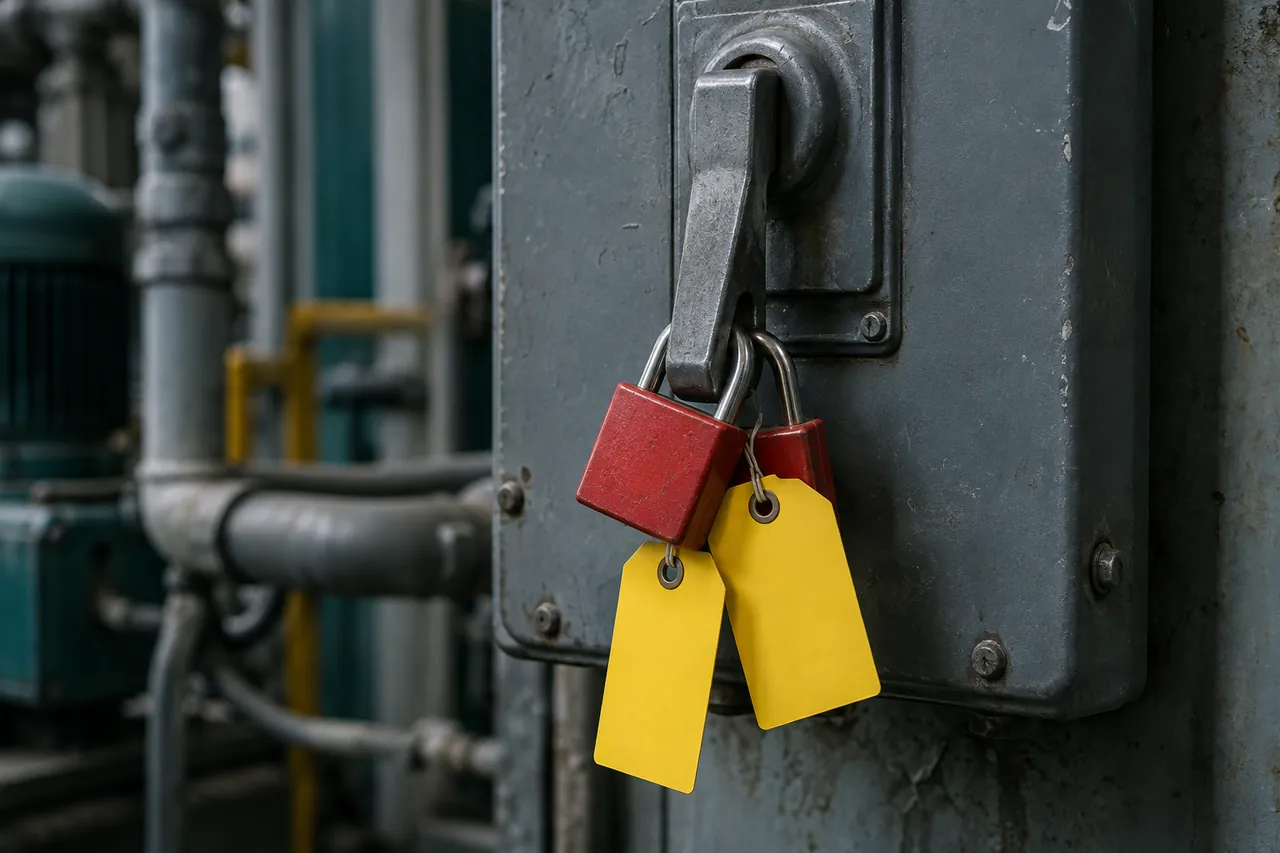
잠금표지(LOTO)를 연출한 이미지입니다.
적용 작업 및 잔류 에너지 확인
LOTO 대상은 정비팀이 설비 안으로 들어가는 대규모 작업에 한정되지 않습니다. 점검, 청소, 수리, 조정 중에도 설비가 예기치 않게 움직이거나 에너지가 방출될 수 있다면 적용 여부부터 확인합니다.
전원을 차단한 뒤에도 압력, 열, 중력, 회전체의 관성 같은 에너지가 설비에 남을 수 있습니다. 에너지원과 차단 위치는 설비별 절차서에 표시하고 작업 전에 현장에서 다시 확인합니다.
작업 준비부터 재가동까지의 여덟 단계
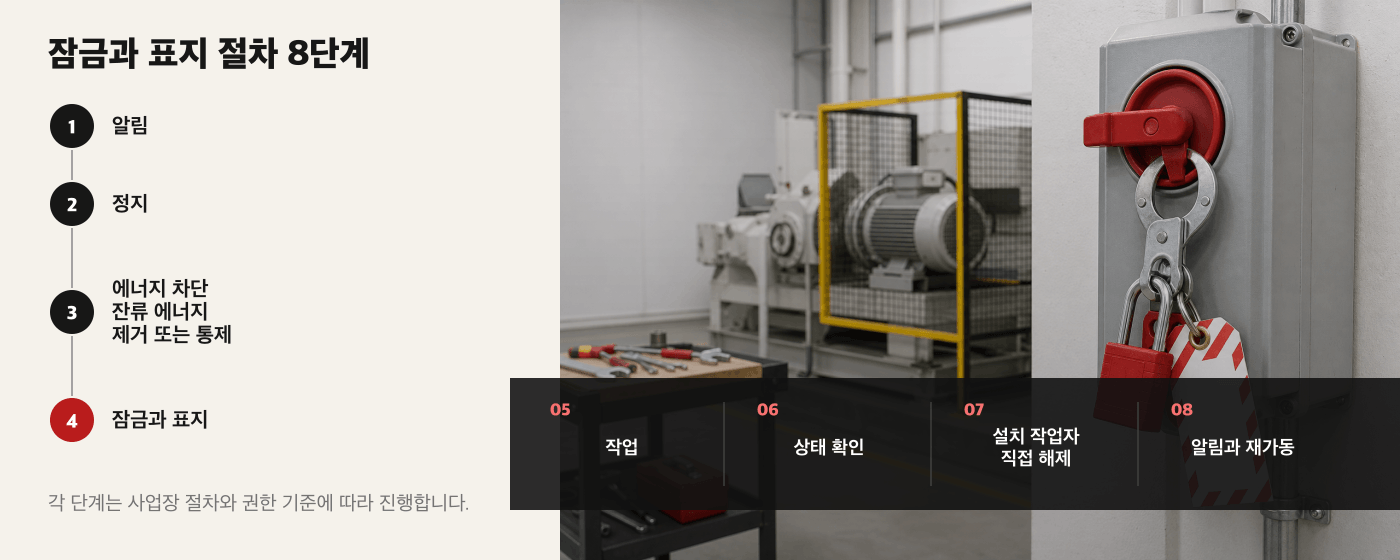
그림 1. 작업 알림부터 재가동까지의 LOTO 순서. 안전보건공단 자료를 바탕으로 정리했습니다.
- 영향을 받는 사람에게 작업 대상과 정지 계획을 알립니다.
- 정해진 절차에 따라 기계를 정지합니다.
- 에너지원을 차단합니다. 잔류 에너지를 제거하거나 안전하게 통제한 뒤 차단 상태를 확인합니다.
- 개인별 잠금장치와 표지를 설치하고 열쇠를 관리합니다.
- 정비, 청소, 수리 등 계획한 작업을 수행합니다.
- 작업을 마치면 사람, 공구, 방호장치, 설비 상태를 확인합니다.
- 잠금장치와 표지를 설치한 담당 작업자가 직접 해제합니다.
- 영향을 받는 사람에게 알린 뒤 정해진 절차로 재가동합니다.
현장에서 절차를 간소화하면 대개 에너지 차단 확인과 작업 종료 후 상태 확인이 먼저 생략됩니다. 이 두 가지는 위 절차처럼 별도 단계로 유지해야 합니다.
작업자별 잠금장치 및 열쇠 관리
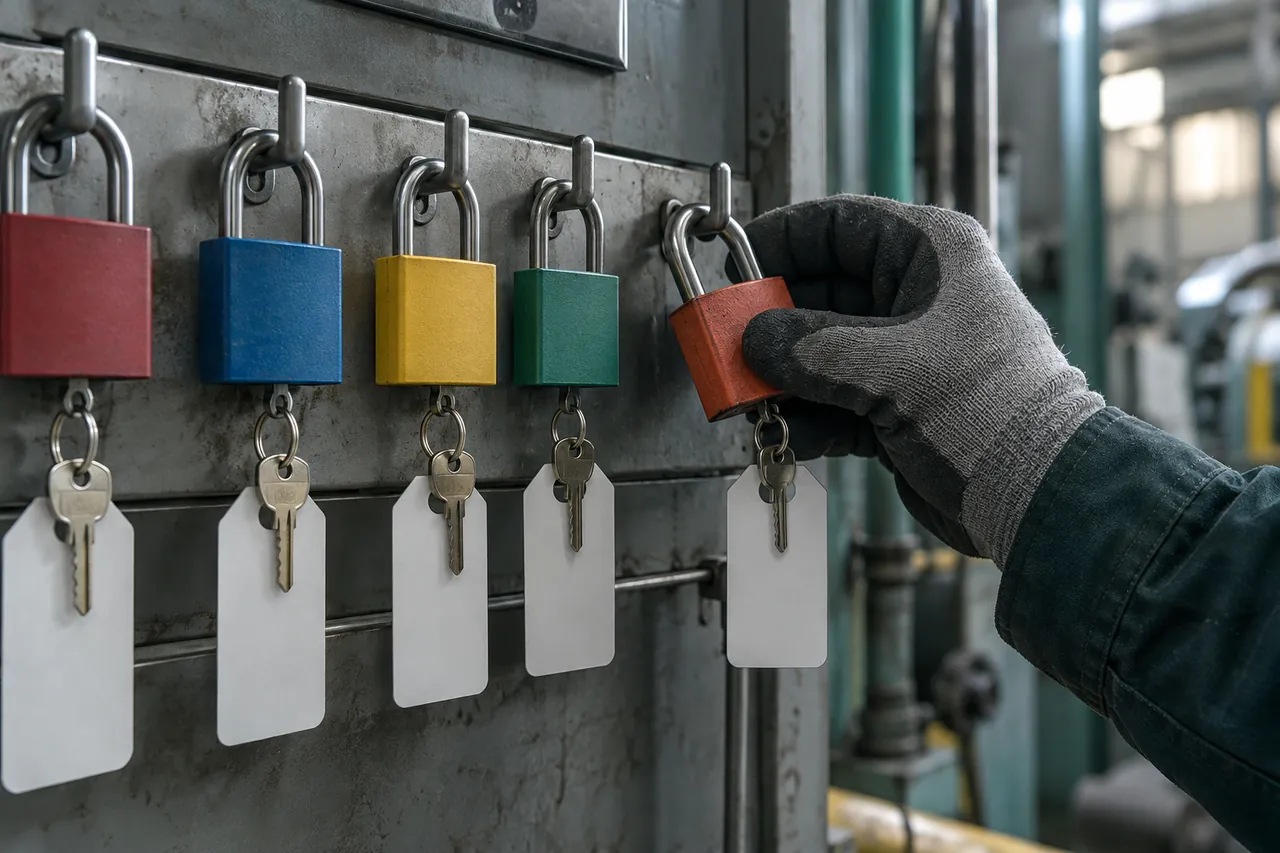
작업자별 잠금장치 관리를 연출한 이미지입니다.
여러 명이 함께 작업하면서 자물쇠를 하나만 걸면, 그 자물쇠를 건 사람이 작업이 끝났다고 판단하는 순간 아직 작업 중인 사람이 위험해집니다. 작업자마다 자기 잠금장치를 걸고 열쇠를 보관해야 현재 보호가 필요한 사람을 확인할 수 있습니다.
해제는 설치한 사람이 직접 합니다. 교대 시에도 보호 조치가 중단되지 않도록 사업장 절차에 따라 인계합니다.
재가동 전 확인 사항
작업 종료 보고만으로 전원을 공급해서는 안 됩니다. 설비 안에 사람이 없는지, 공구와 임시 지지물을 치웠는지, 방호장치를 원래 위치로 복구했는지 확인한 뒤에 가동합니다. 재가동 사실은 영향을 받는 작업자에게 알리고, 모두 안전한 위치에 있는지도 확인합니다.
협력업체와 함께 작업하는 경우 시작 전에 회사별 잠금 방식을 조율하고 책임자를 지정합니다. 전체 에너지원을 관리할 사람과 작업팀별 완료를 확인할 사람을 미리 지정하지 않으면 해제 단계에서 혼선이 생깁니다.
설비를 정지한 사람, 아직 작업 중인 사람, 마지막 상태를 확인한 사람을 기록해야 합니다. 이 기록으로 작업 시작부터 잠금 해제와 재가동까지 절차를 준수했는지 확인합니다.