Korean Serious Accidents Act: Nine Duties and Enforcement Data
Workplace Safety Field Guide 3 of 4: Serious Accidents Act duties and official data
Forty-nine guilty judgments. Read alone, that number makes enforcement of Korea's Serious Accidents Punishment Act look rare. The same review counted 1,252 cases, and 917 of them were still under investigation when the figures were published, so the judgment count is the least settled part of the picture.
For a workplace with 5 to 49 regular employees, the Act has applied since January 27, 2024, and the practical question is not the conviction rate. It is whether the safety and health management system required by Article 4 of the Enforcement Decree actually runs day to day.
The figures below come from the National Assembly Research Service review published on August 28, 2025. Many cases were still in progress at that snapshot, so the figures are not the current final judgment count.
Coverage comes first
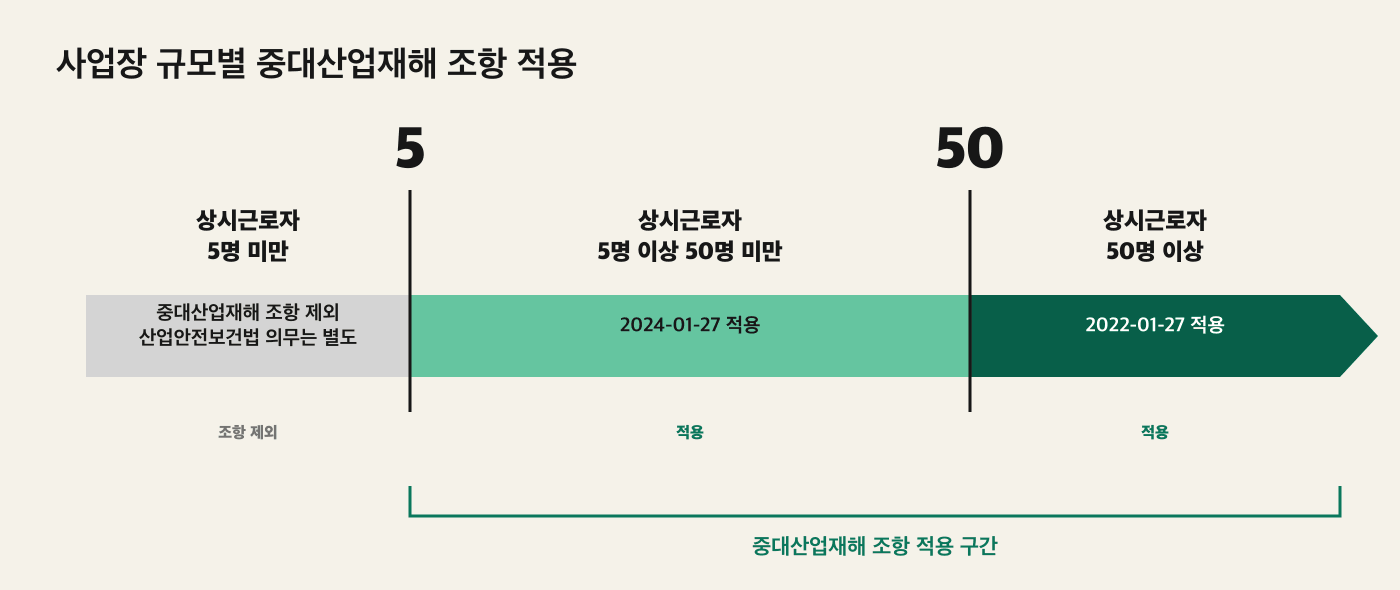
The Act took effect for workplaces with at least 50 regular employees on January 27, 2022 and for workplaces with 5 to 49 regular employees on January 27, 2024. The serious industrial accident provisions exclude workplaces with fewer than five regular employees, but duties under the Occupational Safety and Health Act remain. Counting regular employees is itself a legal question; a headcount taken on one convenient date is not the method.

Figure 1. Effective dates for the serious industrial accident provisions by regular workforce size. Separate Occupational Safety and Health Act duties may still apply below five employees.
The nine duties under Article 4
- Set safety and health objectives and a management policy for the business or workplace.
- Establish a dedicated organization when the business falls within the size and industry conditions in the decree.
- Create a process to identify and improve hazards, then check whether it is implemented.
- Allocate and execute budgets for the people, facilities, equipment, and improvements needed for safety and health.
- Give safety and health managers the authority and budget they need, and evaluate their work.
- Appoint the safety and health professionals required by law.
- Hear worker views at least once every half-year and implement necessary improvements.
- Prepare and test a manual for imminent danger and serious industrial accidents.
- Set criteria and procedures for evaluating contractor capability to prevent accidents.
The dedicated-organization duty is conditional. It covers categories defined by the decree, including workplaces with at least 500 regular employees and construction companies ranked within the top 200 by construction capability, and other duties can vary with industry and workforce conditions.
What the 1,252-case review actually says
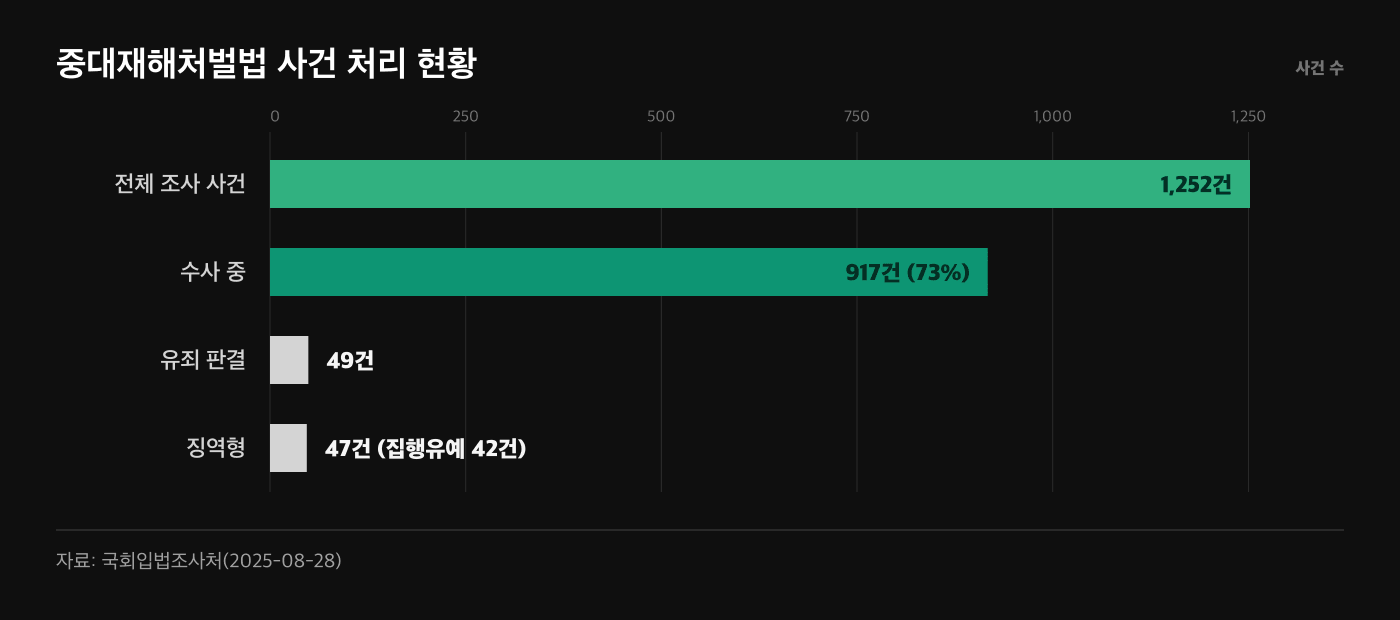
The National Assembly Research Service reviewed all 1,252 cases opened after the Act took effect. At publication, 917 cases, 73 percent of the total, were still under investigation. The 917 figure is not a count of referred cases, and reading it as one distorts the entire enforcement picture.
Among cases that reached judgment, 49 ended in guilty verdicts. Prison terms were imposed in 47, and 42 of those were suspended, an 85.7 percent suspended-sentence rate. The average prison term was about one year and one month, and the average corporate fine was KRW 72.8 million across 50 corporations, calculated after excluding one KRW 2 billion fine.

Figure 2. Case status after three years of the Act. Source: National Assembly Research Service, August 28, 2025. The 917 cases were under investigation, not referred cases.
Set against 1,252 cases, 49 judgments say little about final outcomes while most files stay open. What a workplace can control is different: whether risk assessment findings connect to budgets and corrective actions, whether worker feedback gets a review and a follow-up, and whether contractor criteria are applied rather than filed.
Nine duties, one working record
Start with two coverage checks: whether the Act applies at all, and whether the conditional dedicated-organization duty does. Then give each of the nine Article 4 areas an owner and a source record, treating them as one system rather than nine documents. Risk assessment findings flow into budgets and corrective action. Worker feedback keeps its review result and follow-up in the same record. Contractor evaluation criteria get used rather than merely written down, and the emergency manual gets tested against real working conditions. Incomplete actions carry an owner and a next review date.
Condition signals after corrective action
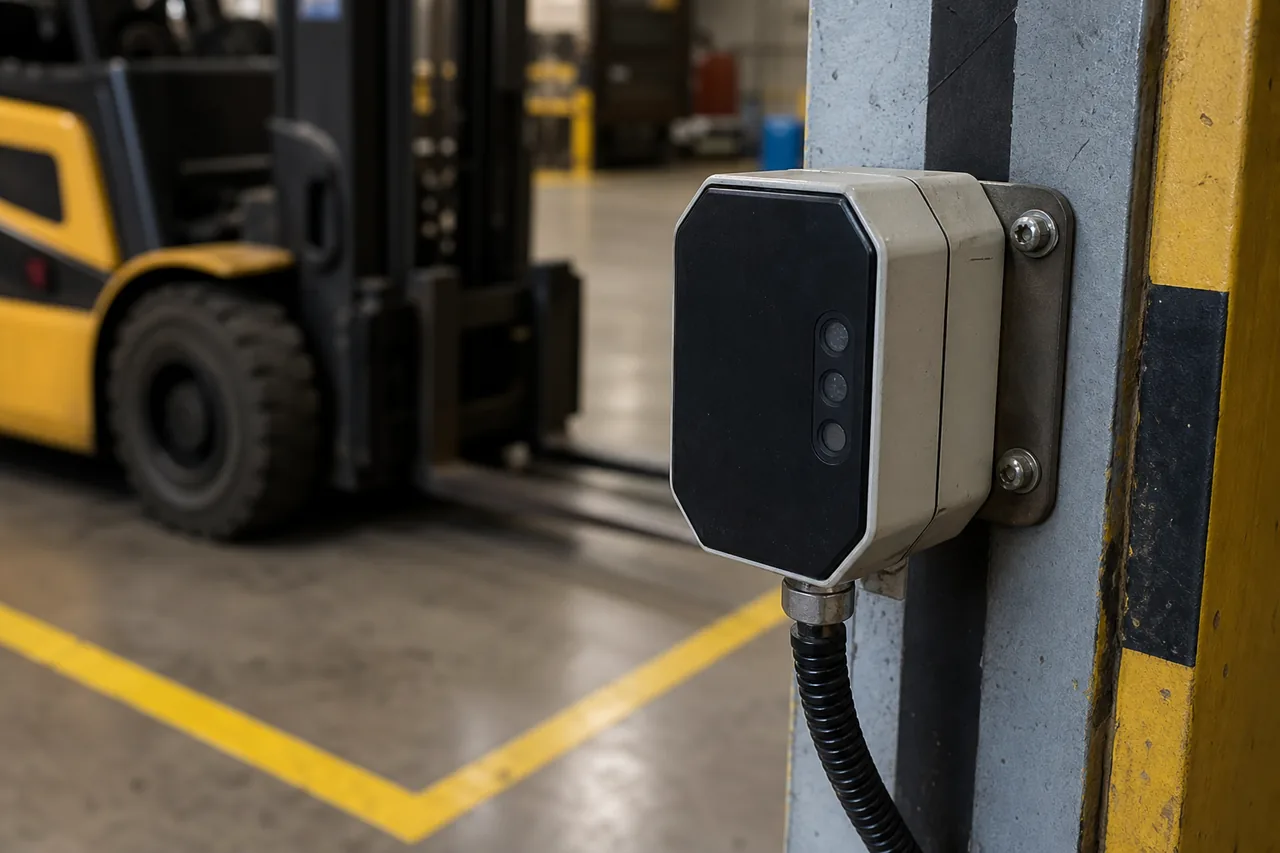
When a corrective action touches equipment, the follow-up question is whether the fix holds. XyloZero facility monitoring keeps acoustic, vibration, and environmental signals on record and flags unusual patterns, which helps decide which equipment the next review should reach first. The nine executive duties and every statutory procedure stay exactly where the law put them.
Official sources
- Article 4 of the Serious Accidents Punishment Act Enforcement Decree, Korean Law Information Center
- Three-year review of the Serious Accidents Punishment Act, National Assembly Research Service
Previous guide: Korean risk assessment in five steps
Next guide: Korean Heat-Work Rules: Break Duties by Apparent Temperature