건설 현장 추락 예방, 2025 통계와 1호 판결
수정일
2025년 재해조사 대상 사고사망자는 605명이었습니다. 이 가운데 286명이 건설업에서 발생했습니다. 고용노동부 잠정통계에서 떨어짐 사고는 전년보다 증가했으며, 중대재해처벌법 1호 판결의 사고도 건설 현장 추락이었습니다.
이 글은 2026년 7월 13일 현재 공개된 고용노동부 2025년 재해조사 대상 사망사고 잠정통계와 시행 중인 법령을 기준으로 작성했습니다.
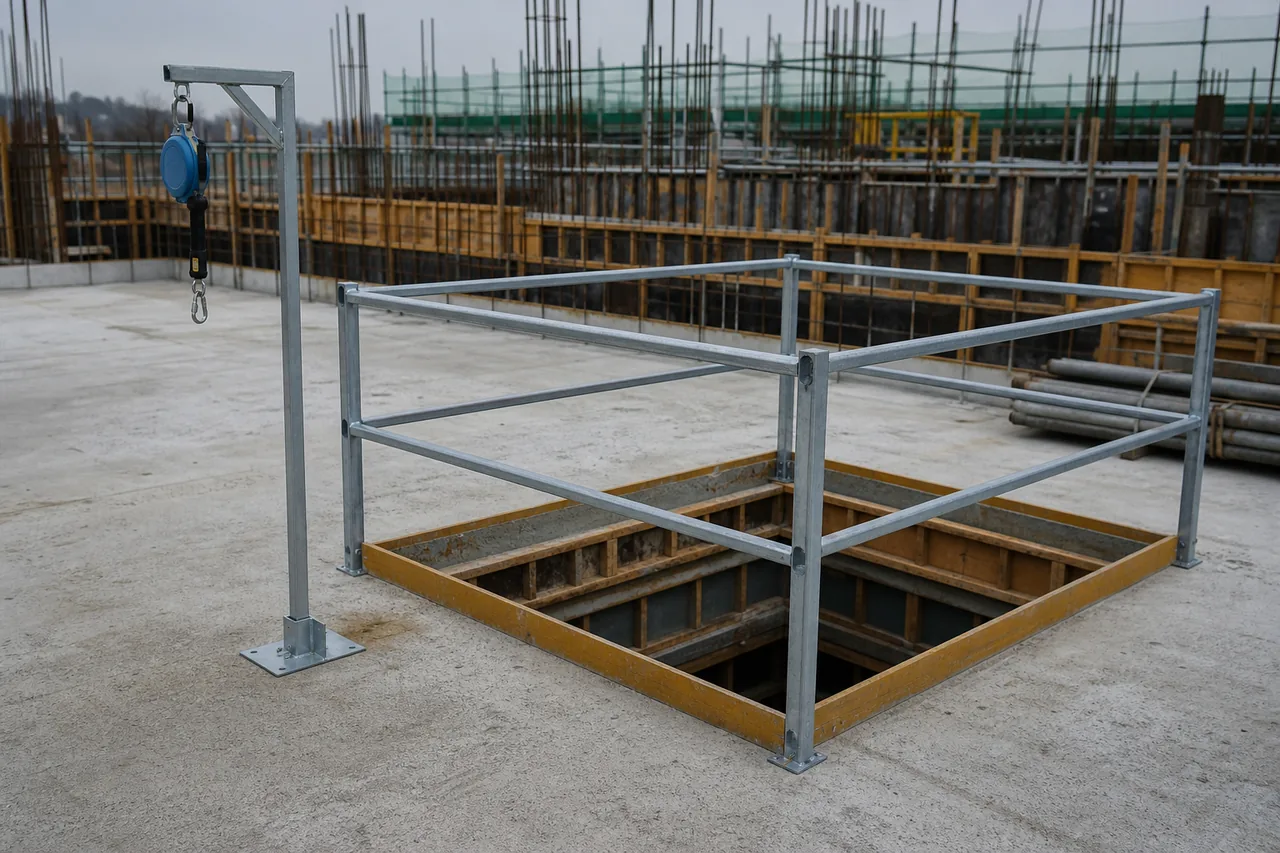
본문의 사고 현장과 무관한 추락 예방 시설 연출 이미지입니다.
사고사망자 605명 중 건설업 286명
고용노동부가 발표한 2025년 잠정통계에서 재해조사 대상 사고사망자는 605명(573건)으로, 전년 589명보다 16명(2.7%) 증가했습니다. 업종별로는 건설업이 가장 많았고 제조업은 감소했습니다(고용노동부 보도자료).
| 구분 | 사고사망자 | 건수 |
|---|---|---|
| 전체 | 605명 | 573건 |
| 건설업 | 286명 | 267건 |
| 제조업 | 158명 | 150건 |
| 기타 업종 | 161명 | 156건 |
사고 유형별로는 떨어짐, 부딪힘, 무너짐이 증가했으나 끼임과 물체에 맞음은 감소했습니다. 유형별 사망자 수는 보도자료 첨부 통계표에 실려 있습니다.
1호 판결 사건의 작업 조건
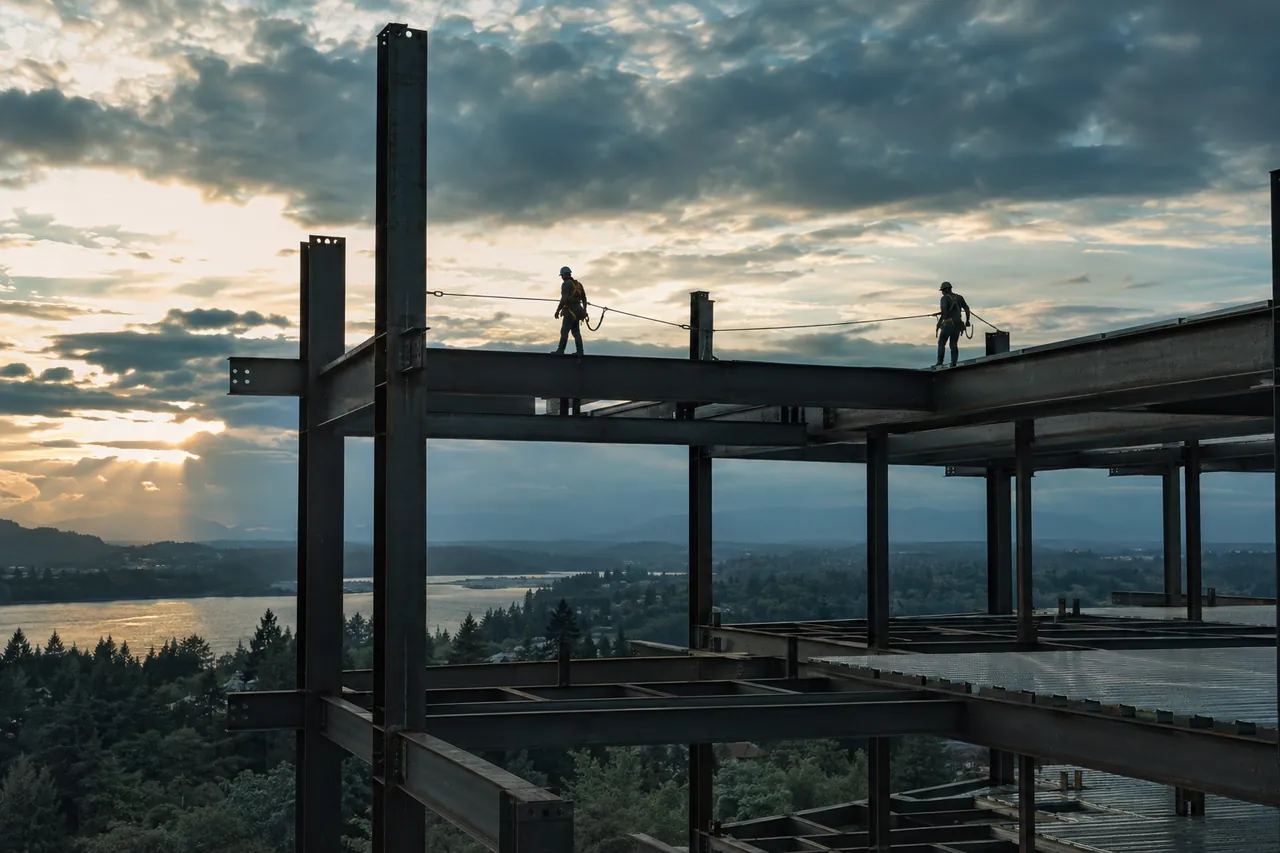
철골 공사 현장을 연출한 이미지입니다. 판결 사건의 현장이 아닙니다.
중대재해처벌법 1호 판결의 사고 현장은 요양병원 증축 공사장이었습니다. 하청 노동자가 5층 개구부에서 무게 94.2 kg의 철근을 옮기다 추락해 사망했습니다. 법원은 원청 대표에게 징역형의 집행유예를 선고했습니다(법률신문). 판결의 법리는 사례집 특별편 중대재해처벌법 1호 판결로 읽는 시행령 4조 의무에서 다루었습니다.
이 사고에는 높은 곳의 개구부, 혼자 운반하기 어려운 중량물, 하청 작업이라는 조건이 겹쳐 있었습니다. 난간과 안전대만 확인하는 점검으로는 이러한 조건이 드러나지 않습니다. 작업 방식과 인력 배치까지 점검 대상에 포함해야 합니다.
일일 점검 항목
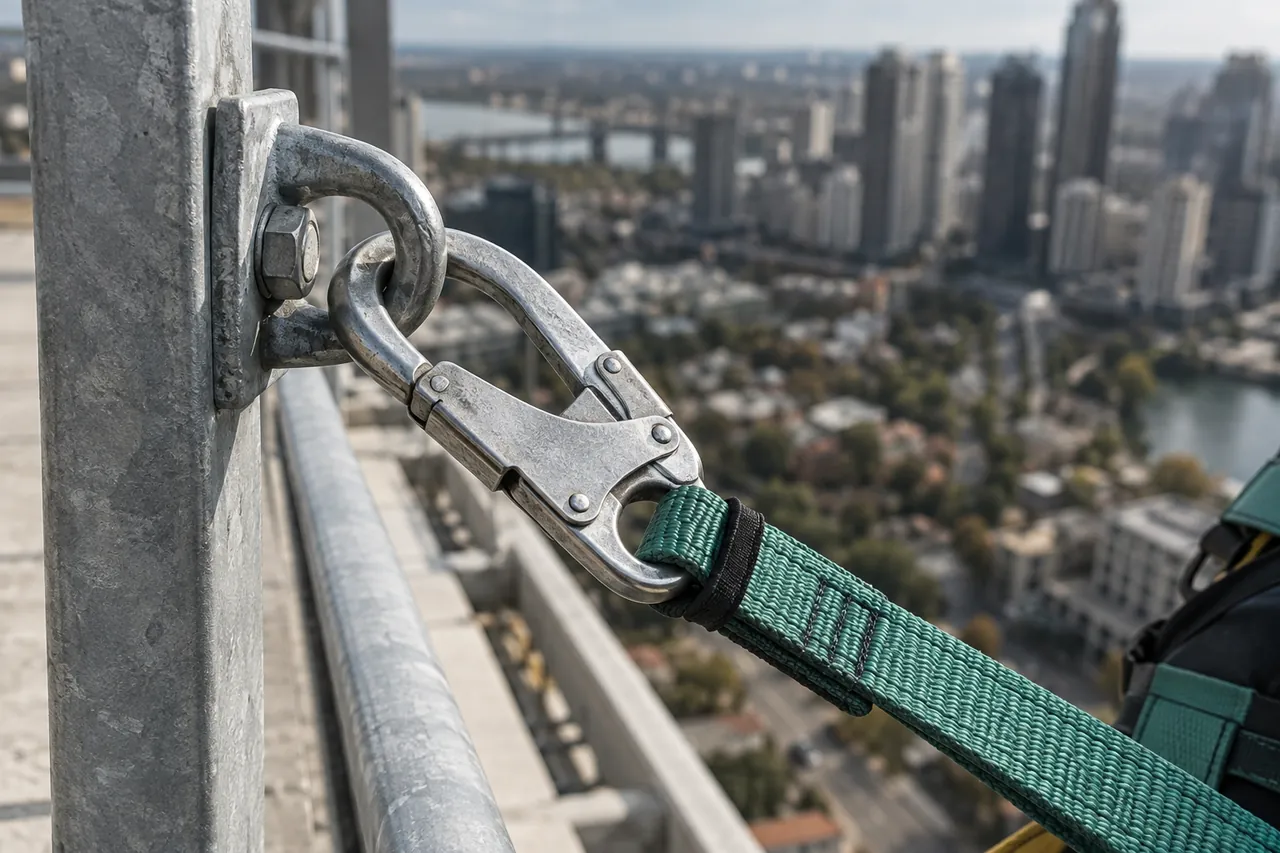
안전대 부착설비를 연출한 이미지입니다.
- 개구부와 단부의 덮개 및 안전난간이 제자리에 있는지, 임의로 제거한 곳이 없는지 확인합니다.
- 작업발판과 통로가 고정되어 있는지 확인하고, 자재가 통로를 막아 작업자가 우회해야 하는 곳이 없는지 점검합니다.
- 안전대 부착설비가 실제 작업 위치에 있는지 확인합니다. 부착설비가 멀면 작업자는 안전대를 체결하지 않게 됩니다.
- 중량물은 운반 인원과 경로를 정하고, 혼자 운반하는 상황이 생기지 않는지 확인합니다.
- 하청 작업 구간도 같은 기준으로 점검하고, 결과를 원청과 하청이 함께 기록합니다.
지적 사항의 조치 완료 여부는 다음 점검에서 다시 확인해야 합니다. 통계 원문과 첨부 통계표는 고용노동부 보도자료에서 확인할 수 있습니다.
안전보건관리체계 전반은 사례집 3편 중대재해처벌법, 50인 미만 사업장이 확인할 9가지에서 다루었습니다.