
2026 Korean Workplace Safety Law Changes by Date
Updated
Korea's 2026 workplace safety changes take effect on June 1, June 26, and August 1. Worker participation duties in risk assessment and the expanded safety inspection scope are already in force. Workplaces need to check compliance with those duties and prepare disclosure records. Assign an owner and supporting records to each deadline.
This guide was reviewed against laws in force or promulgated as of July 12, 2026. Confirm applicability for each workplace against the current statutory text and guidance from the responsible authority.

An illustrative image of preparing for regulatory changes.
What changed and when
| Effective date | Change | Action to take now |
|---|---|---|
| June 1, 2026 | Worker participation and communication duties became part of the statutory risk assessment process. | Record participants, the assessment process, and how results were shared. |
| June 26, 2026 | Mixers, crushers, and grinders entered the mandatory safety inspection regime. | Match each machine installation date to its first inspection deadline. |
| August 1, 2026 | Safety and health disclosure begins for entities covered by the Act. | Confirm coverage and collect evidence for the five disclosure areas. |
| From January 1, 2027 | Risk assessment administrative fines phase in by workplace size. | Distinguish the 2027 and 2028 start dates. |
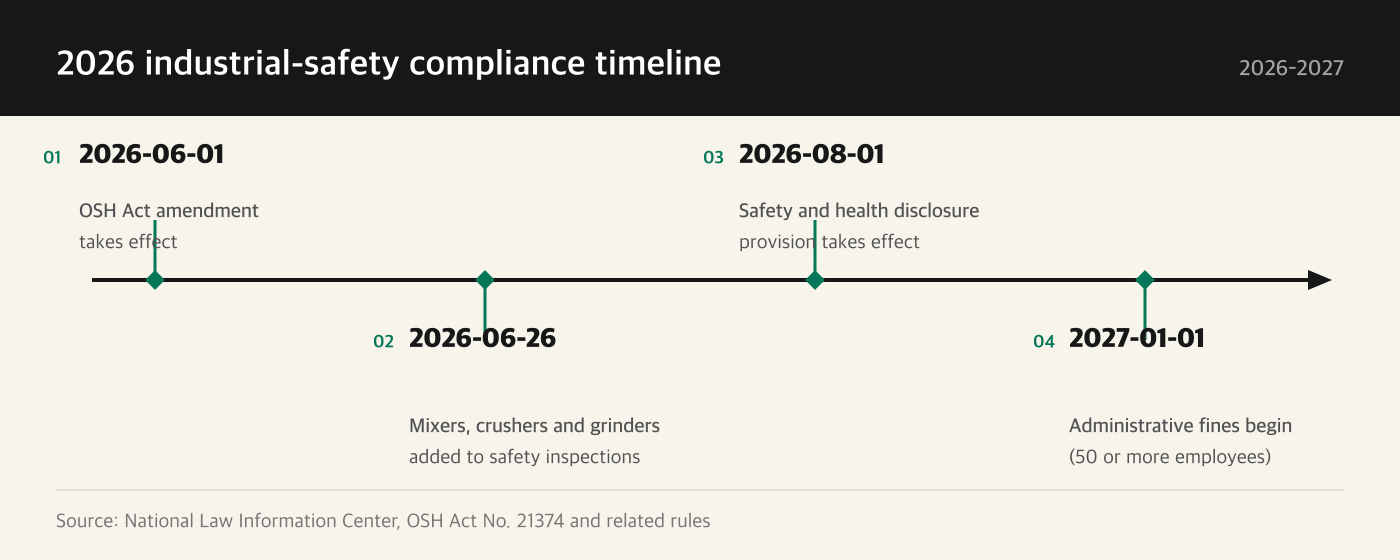
Figure 1. 2026 workplace safety implementation timeline. Source: Korean Law Information Center, checked July 12, 2026.
June 1: participation and communication records
A completed risk assessment form used to be the end of the paper trail. Since June 1 it is not. Article 36 of the Occupational Safety and Health Act requires worker participation, requires participation by a worker representative when requested, and requires results to be communicated through training, briefings, postings, written material, or electronic means.
The weak point is usually the connections between records. A sign-off line survives, but nothing ties it to the walkthrough that found the hazard or to the notice that reached the crew. Useful evidence links the people who identified hazards, the person who confirmed each control, the completion record, and the communication record.
The fines are already defined. Skipping the risk assessment can carry an administrative fine of up to KRW 10 million; failing on participation or communication, up to KRW 5 million; recordkeeping violations, up to KRW 3 million. The provisions phase in on January 1, 2027 and January 1, 2028 by workplace size.
June 26: inspection deadlines by machine

An illustrative image of a mixer and a crusher. Whether a machine falls under inspection depends on its specifications and type.
Mixers, crushers, and grinders became subject to mandatory safety inspection on June 26. The general cycle is a first inspection within three years of installation and one every two years after that. Machines installed before the rule took effect have different deadlines under transitional schedules. A single inspection date for all machines overlooks these differences.
Machine names alone do not establish inspection order. Record the serial number, installation date, work area, latest internal check, applicable transition rule, and next statutory deadline to identify which machines are due first. Keep statutory inspection records separate from routine internal maintenance.
August 1: five disclosure areas
When disclosure preparation starts, the accident count is usually the first file anyone opens. It feeds one of five areas: the safety and health management system, industrial accident history, prior-year activity and current-year plans, safety and health investment, and recurrence-prevention measures. The duty covers employers above a size set by presidential decree and public entities specified by law.
The other four areas draw on different records. Responsibility charts, plan-versus-execution records, investment evidence, and corrective actions need a consistent reporting date and scope before the areas line up. Confirm coverage against the latest decree text, not a press-release summary.
Coverage tests and a preparation sequence for each area are in Safety and Health Disclosure Starts August 1.
Checks by effective date
- June 1: a defined participation step for every assessment, plus a record of how results were communicated through training, posting, writing, or electronic means.
- June 26: per-machine installation dates and inspection deadlines, with statutory and internal records kept apart.
- August 1: a coverage check against the current decree, and an owner, reporting date, and evidence location for each of the five areas.
Regularly check internal procedures against the amended law, regardless of the effective dates. The same records support inspections, the August disclosure, and the next risk assessment.
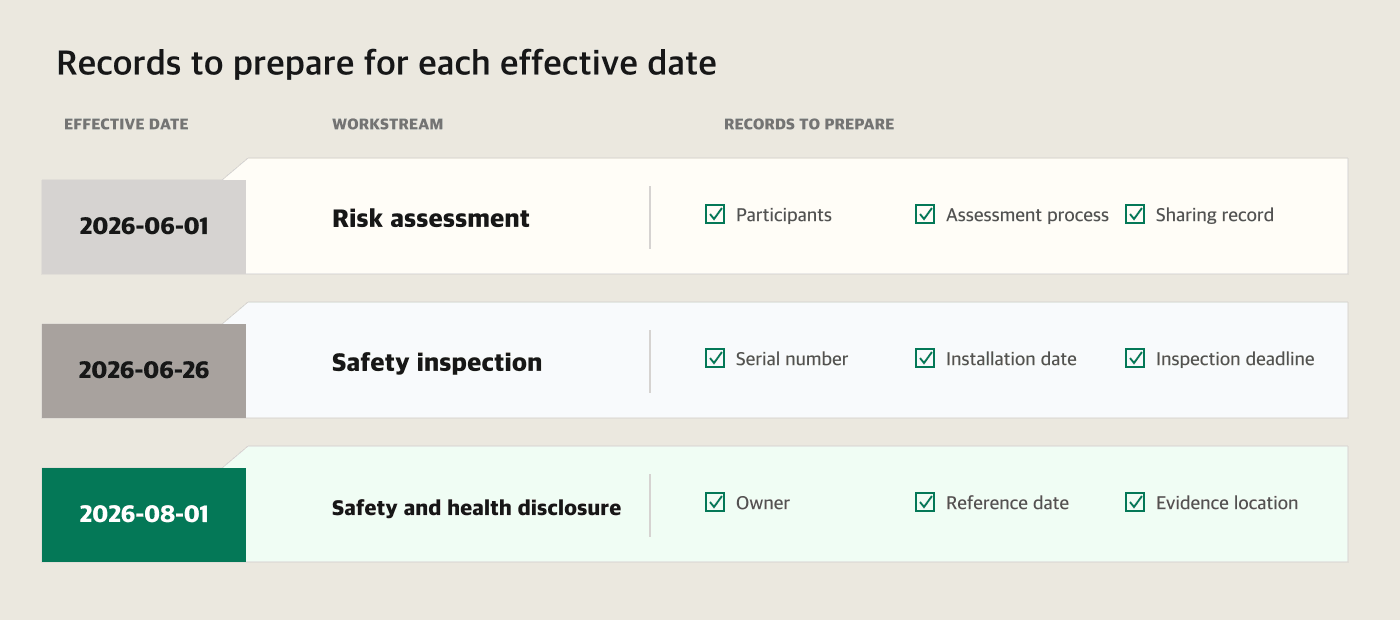
Figure 2. Records grouped by effective date: participation and communication for risk assessment, equipment history for safety inspection, and ownership, reference dates, and evidence locations for disclosure.
Keeping evidence current after the fixes
Conditions can change after corrective action. XyloZero facility monitoring captures acoustic, vibration, and environmental condition signals at the edge and flags anomalies for follow-up review. These records supplement the review; they do not replace worker participation, mandatory inspection, disclosure, or any other legal duty.
Official sources
- Occupational Safety and Health Act revisions and effective dates, Korean Law Information Center
- Article 36 risk assessment, Korean Law Information Center
- Mandatory safety inspection provision, Korean Law Information Center
Next guide: Korean Risk Assessment in 5 Steps: 2026 Guide