Port Cargo-Handling Accidents and Field Checks
Updated
Port cargo handling moves heavy, long cargo with cranes, forklifts, and transport vehicles through the same space where people work on foot, and vessel schedules keep the pace tight. According to KOSHA's monthly Safety and Health (December 2022), collisions with transport equipment were the most common cause of death in port cargo handling: 21 of the 64 accident deaths (32.8%) from 2011 to June 2021.
This guide was written against research and training materials public as of July 13, 2026. The fatality breakdown quoted here comes from a KOSHA publication and may use a different basis from the annual official industrial accident statistics.
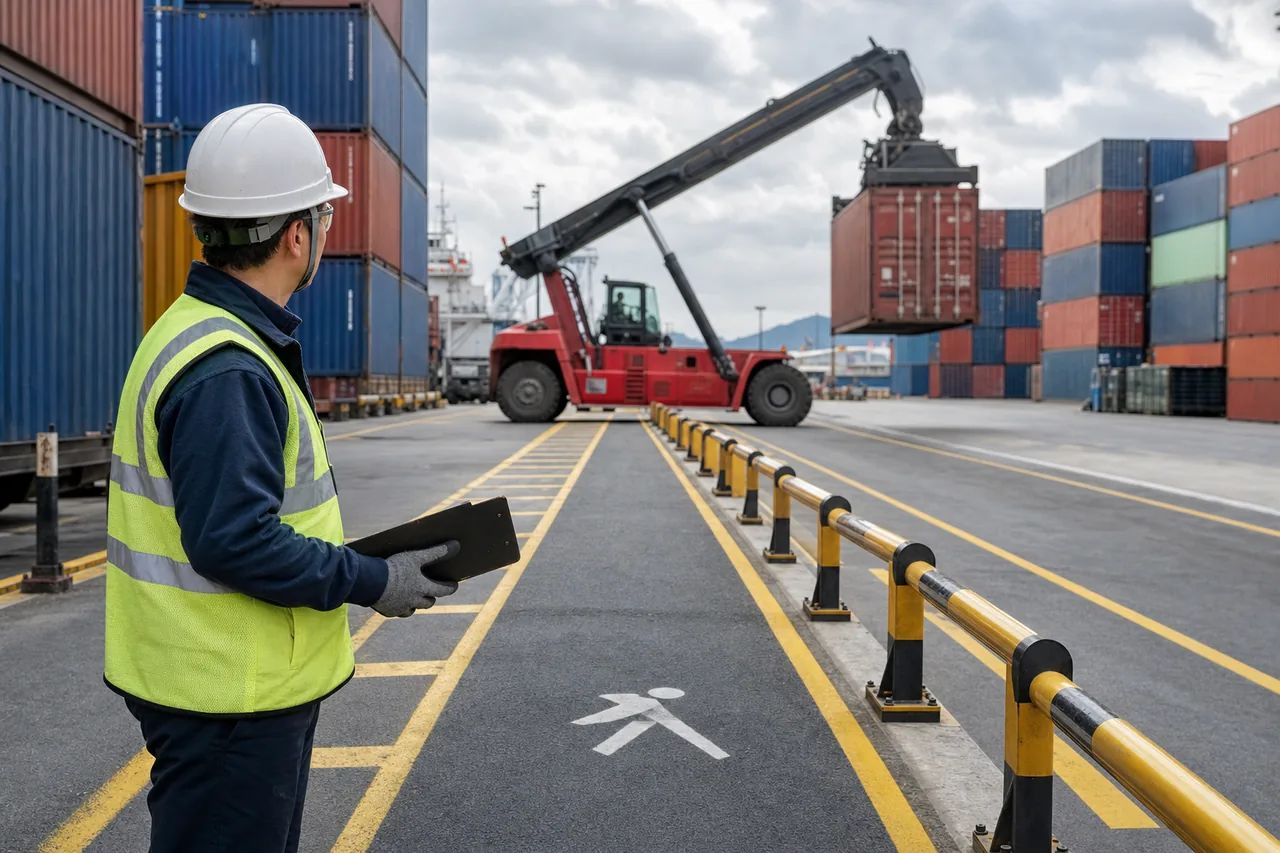
Illustrative scene showing separation between pedestrian and cargo-equipment routes.
Fatality types from ten years of data
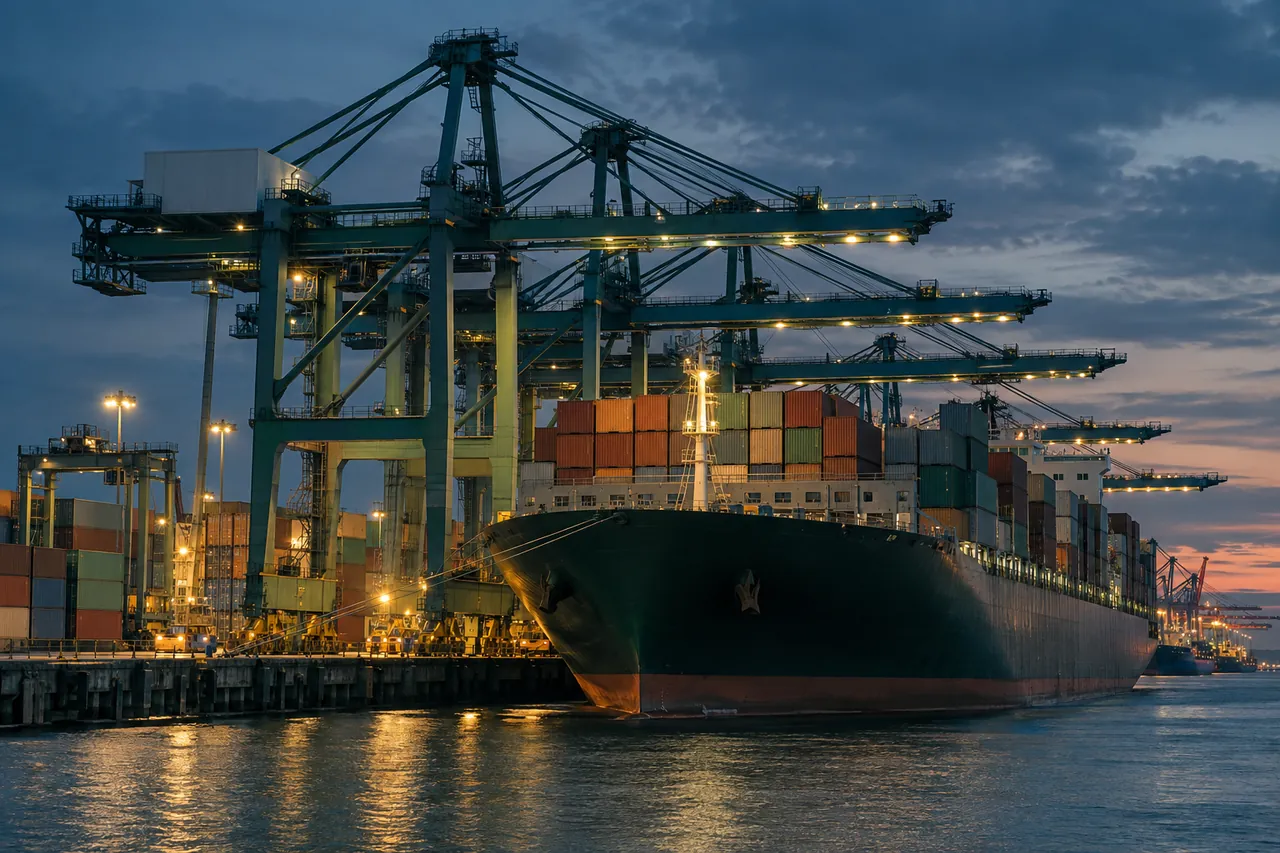
An illustrative container terminal. It is not a site from the cited data.
| Accident type (2011 to June 2021) | Deaths | Share of deaths |
|---|---|---|
| Collision with transport equipment | 21 | 32.8% |
| Falls | 14 | 21.9% |
| Struck during maintenance, repair, or installation | 10 | 15.6% |
| Struck by handled cargo | 8 | 12.5% |
| Crushed by containers | 7 | 10.9% |
| Oxygen deficiency | 3 | 4.7% |
| Electric shock | 1 | 1.6% |
| Total | 64 | 100% |
Source: KOSHA, monthly Safety and Health, December 2022, p. 6, "Port cargo handling: the risks of loading and unloading" (citing KOSHA's Port Cargo Handling Practical Guide).
Collisions and crushing happen while equipment and cargo are moving. Start a review of accident causes by checking routing and access control.
Checks that start with routing
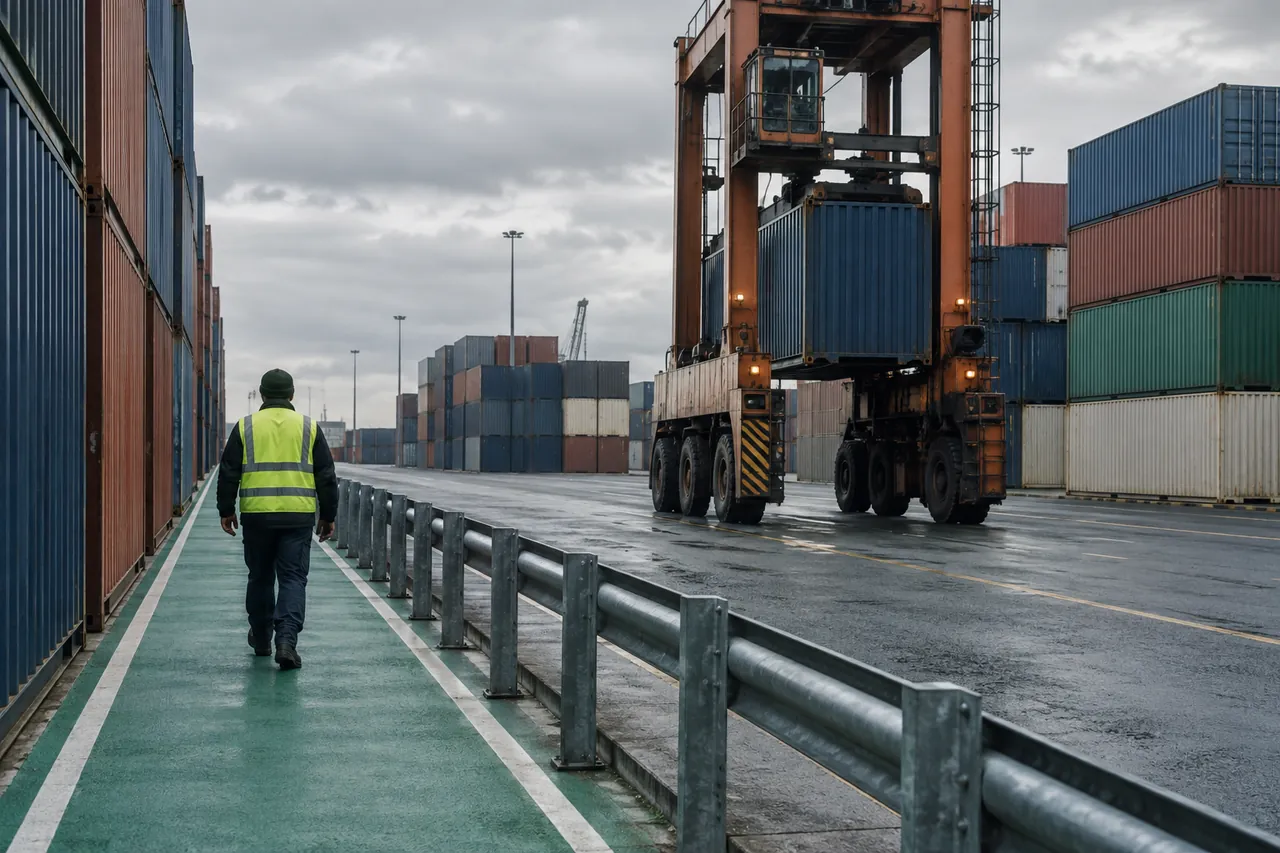
An illustrative image of separated pedestrian and equipment routes.
- Physically separate vehicle and equipment routes from pedestrian zones; post signalers and traffic rules where they cross.
- Map the blind spots where workers disappear from an operator's view, and set stop-before-entry rules there.
- Check fall protection at elevated access points: container tops, hatches, ladders.
- Control the zone before maintenance or repair begins, and confirm worker positions before restarting equipment.
- Keep exclusion lines under suspended cargo and around container stacking zones.
- Record findings, completed fixes, and the owner of each item, then re-verify at the next inspection.
For new-worker training, the Korea Occupational Safety and Health Agency (KOSHA) publishes material for the port cargo-handling industry (public data portal).
Related case: Continuous STS crane drivetrain monitoring case
The inspection order for work at height is covered in the field-guide special edition Construction Falls: 2025 Data and the First Ruling.