
Serious Accidents Act First Ruling and Article 4
Updated
Korea's first conviction under the Serious Accidents Punishment Act came on April 6, 2023. It showed for the first time how a court weighs an executive's duty to secure safety and health, and the court's analysis started from the nine duties in Article 4 of the enforcement decree.
This guide was written against the Act and decree in force as of July 13, 2026. Check the statutory text and the ruling itself before applying it to a specific case.

Illustrative workplace safety review unrelated to any specific case.
The case behind the first conviction
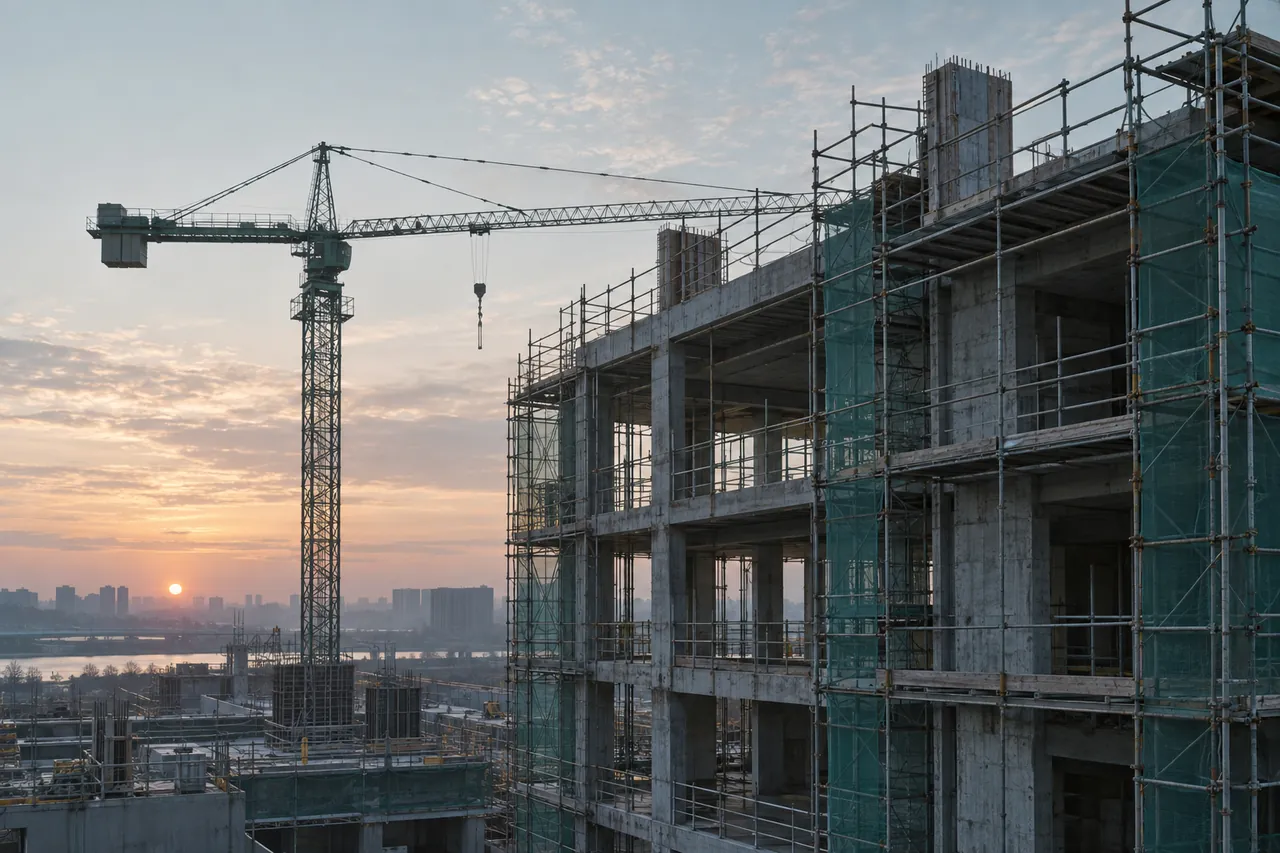
An illustrative construction site. It is not the site involved in the ruling.
On April 6, 2023, the Goyang branch of the Uijeongbu District Court sentenced the representative of a general contractor to one year and six months in prison, suspended for three years, over a fatal fall at a nursing-hospital extension site. The company was fined KRW 30 million and the safety manager KRW 5 million. A subcontracted worker fell to his death while moving a 94.2 kg rebar bundle on the fifth floor. Both sides waived appeal, so the ruling became final (Legal Times, Kyeongin Ilbo).
The sentence length is not what made the ruling a reference point. The person punished was the executive, not a site manager, and the guilty finding rested on the safety and health management system the Act requires rather than on an individual site measure under the Occupational Safety and Health Act.
The nine duties examined in investigations and trials
Article 4 of the Act requires executives to build and operate a safety and health management system, and Article 4 of the decree spells that out as nine items. Investigations and trials work through this list.
| Item | Summary |
|---|---|
| Goals and policy | Set safety and health goals and a management policy. |
| Dedicated organization | Larger businesses must run a dedicated safety and health team. |
| Hazard identification and improvement | Maintain and check procedures for finding and fixing hazards. This is the item that connects to risk assessment. |
| Budget | Allocate a prevention budget and spend it as intended. |
| Safety managers | Give responsible managers authority and budget, and evaluate their performance. |
| Professional staff | Assign the safety and health professionals the law requires. |
| Worker input | Run a procedure for hearing workers and reflect what needs fixing. |
| Imminent danger | Prepare and check manuals for work stoppage and evacuation. |
| Contractors | Set criteria and procedures for evaluating contractors' accident-prevention capability. |
A court examines whether each duty actually operated, not whether a document existed: whether the allocated budget went to fixing real hazards, and whether hazards were found and fixed through the written procedure. The decree text is available at the Korean Law Information Center: Serious Accidents Act enforcement decree.
Three years of enforcement data
A National Assembly Research Service census published in August 2025 found that 917 of 1,252 cases since the Act took effect, 73%, were still under investigation at publication. Of 49 guilty verdicts, 47 carried prison terms, and the suspended-sentence rate was 85.7% (NARS). Most cases remain open, and the convictions so far have typically ended in suspended prison terms. The full statistical picture is in guide 3 of 4, Korea's Serious Accidents Act: 9 Checks for Sub-50 Workplaces.
Amendments such as decree revisions, sentencing guidelines, and stronger financial penalties are under discussion, but as of July 2026 none is enacted law. Distinguish proposals under discussion from enacted rules.
Records to keep under each duty
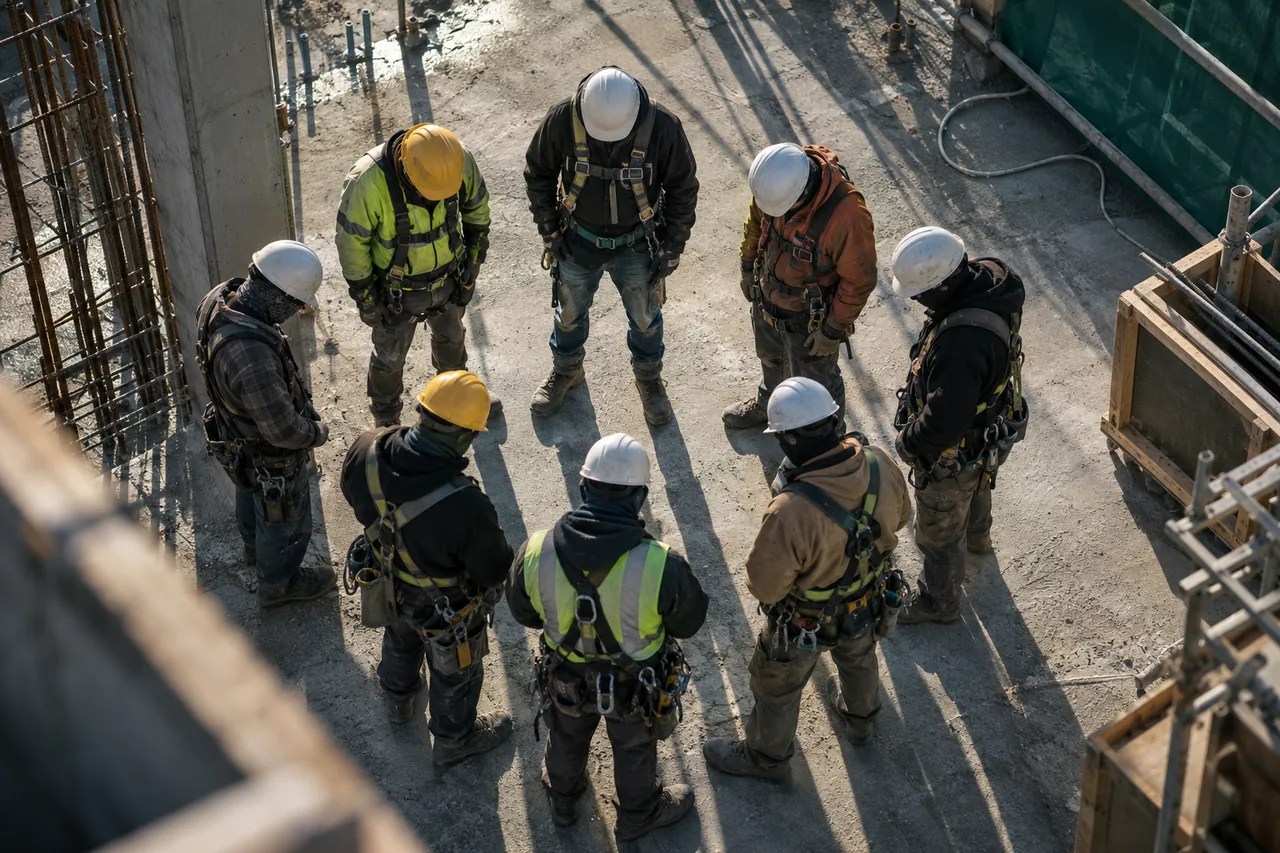
An illustrative image of a pre-work safety briefing.
- Keep safety and health goals and the management policy in writing, with an annual revision trail.
- Link risk assessment findings to the improvement actions taken, item by item. Watch for records that show findings but no fixes.
- Manage the safety budget with allocation and spending tracked separately.
- Whatever form worker input takes, meetings or a reporting channel, keep records that it ran.
- Check the imminent-danger response manual every half year and record the check.
- Include contractor evaluation criteria and procedures in outsourcing contracts.
The full-year schedule is in guide 1 of 4, 2026 Korean Workplace Safety Law Changes by Date.
Identifying and correcting hazards requires ongoing records of equipment condition. A monitoring tool such as XyloZero can record sound, vibration, and environmental signals for this purpose.